





Link copied

There’s a lot of debate as to what constitutes ‘country music’. Does there need to be a fiddle in the band? Is it simply three chords and the truth? Is it whatever you want it to be, as long as there’s a reference to trucks and/or beer?
There’s a Riley Green song from 2020, which finds the now-moustachoied star reflecting on how quickly trends are picked up and dropped in today’s world. He proudly declares, “I’ll be ready when Jesus and Wranglers make a comeback”.
Well, Riley, it seems you’ve got your wish. All it takes is a quick glance at the Billboard 200 and Hot 100, the list of artists currently able to sell out stadiums, the title of Lainey Wilson’s 2026 Netflix documentary and the abundance of cowboy- and cowgirl-themed items in any home-store today, and you’ll see that country music is undoubtedly cool again. Similarly, Contemporary Christian Music (CCM) is more popular than it’s been in decades, with a new crop of social media savvy, Gen-Z-focussed hitmakers emerging - most notably, Forrest Frank, Josiah Queen and Brandon Lake.
Forrest Frank blurs the lines between a host of genres, but his Apple Music bio sums up his sound best when it frames Forrest as hosting “Bible study on the beach”. There’s a summery, breezy, lo-fi feel that permeates his catalogue, with the former Surfaces band-member delivering uplifting odes to being in the sun and letting go of your worries, before nimbly - and often subtly - weaving in scripture.
Forrest Frank’s whole brand and style feels refreshingly contemporary, and strays from the traditional, choir-backed Gospel sound. You’d easily find Forrest on the same playlists as Kygo and The Beach Boys, and his recent surf-inspired project with Noah Hayden, DAWN PATROL, epitomises his mellow, sunny aesthetic.
Brandon Lake, meanwhile, opts for a more rock-inspired style that serves as an equally stark reimagination of what it means to release ‘Christian’ music. Such is his willingness to appeal to a broader audience, Lake caught flak last year for his comments that CCM has typically been too jargon-laden to extend its reach beyond deeply devout listeners. What feels unique about Forrest and Lake is that you could enjoy the joyful ambience and the infectious hooks regardless of your faith - while, on the flipside, if you want to dive into the weeds and analyse the Biblical references, you can.
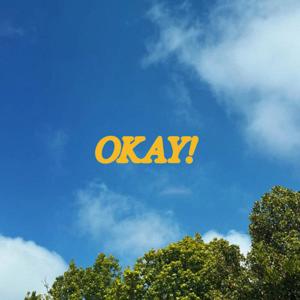
Thanks to Forrest Frank and Brandon Lake, last year, CCM had two songs inside the Billboard Hot 100 for only the second time in history. The first was in 2014, when Carrie Underwood and Craig Wayne Boyd - both country singers - accomplished this feat with ‘Something in the Water’ and ‘The Old Rugged Cross’. Frank and Lake have created immensely viral hits in the form of ‘Your Way’s Better’ and ‘Hard Fought Hallelujah’ respectively, with both following these up in 2026 with more hit singles, such as Frank’s ‘OKAY’, which - at the time of writing - has been used to soundtrack 956,000 TikTok posts.
What makes their success particularly fascinating is the way in which they’ve embraced country music as a springboard from which they can access new listeners. In the lead-up to his latest solo album, CHILD OF GOD II (BACK TO BACK), Forrest teamed up with Thomas Rhett for the irresistibly feel-good ‘Nothing Else’, while Lake joined forces with Jelly Roll for the soulful ‘Hard Fought Hallelujah’. ‘Nothing Else’ didn’t reach the viral heights of ‘Your Way’s Better’, but it nonetheless entered Spotify’s Viral 50 USA chart, while ‘Hard Fought Hallelujah’ quickly blossomed into one of Lake’s biggest songs to date. The duet has earned over 61 million streams on Spotify alone.
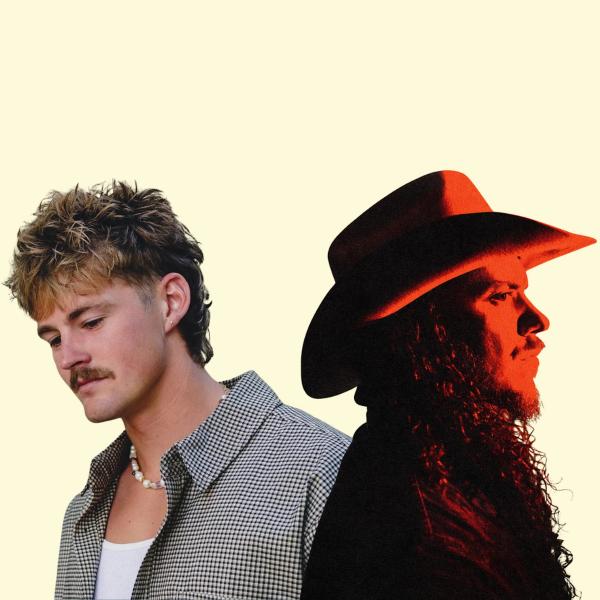
‘Hard Fought Hallelujah’ was already enjoying a viral moment before Jelly Roll hopped on the 2025 remix, but Jelly’s addition unquestionably opened up the song to a national audience, with the duo subsequently being invited to perform the track on American Idol and a host of late-night talk-shows. It gave Lake more clout in the country space, with the South Carolina native appearing at CMA Fest and donning a cowboy hat for the promotional imagery around his latest album, King of Hearts. Anyone who’s been to a Jelly Roll concert knows that, at its core, it’s not too dissimilar from a Brandon Lake show. Now, Lake is teasing a full-blown country crossover project, and has already released high-profile collaborations with Lainey Wilson (‘The Jesus I Know Now’), Bailey Zimmerman (‘Just Believe’) and Cody Johnson (‘When a Cowboy Prays’), with more seemingly on the way with Dan + Shay, HARDY, Russell Dickerson and Tyler Hubbard. This week, at CMA Fest, a year on from his iconic performance with Jelly Roll, Lake is hosting a brand new “Country Church” pop-up.
‘Nothing Else’, meanwhile, feels like less of a cornerstone to Forrest Frank’s meteoric ascent, with Forrest’s unique blend of styles and the extent to which he is attuned to younger listeners seemingly a recipe for success regardless of his TR feature. Nonetheless, it introduced Forrest to a country listenership, with various high-profile artists in the genre paying tribute to Forrest via socials, such as Bailey Zimmerman.
This crossover also appears to have inspired Rhett, who Forrest claims is now working on his own Christian record. Despite only venturing into the CCM space less than three years ago, Forrest already boasts over 8 million monthly Spotify listeners, with multiple songs amassing over 100 million streams.
But there’s something much larger at play, here, beyond these isolated collaborations. Country’s popularity boom has been in process for the best part of five years - really, ever since Morgan Wallen and Zach Bryan started gaining prominence in the late 2010s. As we all know, it’s commonplace in country to casually reference God and Jesus, with some of the genre’s earliest flag-bearers beginning as Gospel singers. From Johnny Cash to Carrie Underwood, country has a longstanding relationship with spirituality, with a slew of leading artists choosing to release standalone CCM projects. Today, you have artists such as Anne Wilson transitioning from CCM to country music, maintaining faith-led lyricism while incorporating traditionally country imagery and instrumentation.
The fact that country has broken through into the mainstream over the past few years means that hearing songs with themes of faith, prayer and God has become normalised for younger listeners. Country’s predecessor as the No. 1 US genre, Rap, would often cite spirituality, but in a much less consistent or prominent way. In country, faith is such a pervasive and integrated theme, you barely notice it.
Morgan Wallen’s I’m the Problem is still one of the most popular albums in North America, holding its own in the Top Five of the Billboard 200 over a year after its release. That project pivots around religion, particularly on the likes of ‘Genesis’, ‘Revelation’, ‘I Ain’t Comin’ Back’ and ‘The Dealer’, while various newer country acts, such as The Red Clay Strays and The Jack Wharff Band, openly describe themselves as Christian bands. Similarly, country’s biggest star of today, Ella Langley, delves into her faith across Dandelion, most viscerally on ‘Speaking Terms’. However - crucially - Langley does so in a way that feels personal, where she is documenting her spiritual journey, rather than advising or preaching.
This has cleared the path for the much more recent emergence of CCM, which often feels like a slightly more devout and overtly spiritual sibling to country. It’s not to say Forrest Frank and Brandon Lake wouldn’t have become the chart titans they are today without country music, rather, it’s acknowledging that, maybe all along, this CCM wave was the inevitable next step after country’s ascendance.
What’s interesting is that, with country laying the foundation for CCM’s resurgence, CCM is now, in turn, influencing country. Spiritually-minded country music is quickly becoming the genre’s latest trend, with a host of artists leaning into the faith-inspired themes that have always underpinned country music.
You have artists like Josiah Queen, who comes from a CCM background, but his viral hits, ‘make heaven crowded’, ‘demons’ and ‘Dusty Bibles’, sound like Noah Kahan folk, with Queen later reimagining the latter with the 2026 ACM New Female Artist of the Year, Avery Anna.
The visibility of Forrest Frank and Brandon Lake’s new brand of CCM seems to have given country artists the assurance to express their beliefs more vocally through their music, without alienating those who don’t share them.
This will be the key, it seems, to sustaining any kind of longer impact on the charts, rather than this simply being a fleeting fad that diminishes in a year or so. The allure of country’s portrayal of faith is that it is a very personal form of spirituality, where the song’s protagonist might miss Sunday service due to being hungover, but then they go out on the lake for a day of fishing and have a profound, one-to-one conversation with God instead. It removes some of the more fixed and less fluid aspects of organised religion that can put off younger, curious listeners, and by putting the focus on one’s personal relationship with faith - as Langley does on ‘Speaking Terms’ - it comes across as less prescriptive. The cri-de-coeur is “I spoke to God today” rather than “I spoke to God today and so should you”.
If the latter becomes the main message, it will feel more like a conversion tool, rather than the mere expression of faith that it currently appears to be. If spiritual country music is the next big movement in the genre, then the next big challenge will be ensuring it still feels accessible and enjoyable to those of all faiths.
For more on Forrest Frank, see below:

Comments
Anyone can read the comments. You need a free account to post one.
Loading comments…
Keep it civil. Read our community guidelines.