





Link copied

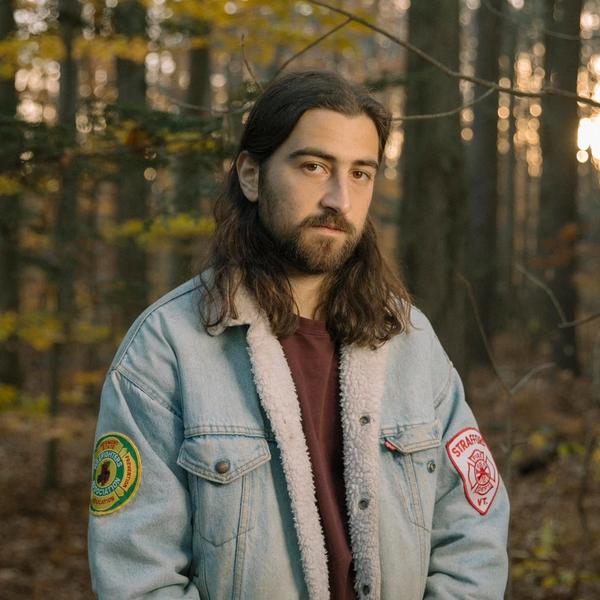
Few artists are associated with one particular season in the way that Noah Kahan is, with the Vermont native cementing himself as the unofficial King of Fall through his visceral, wistful meditations on the weather turning hostile, the leaves losing their summer verve and the evenings clawing back the sunlight earlier and earlier.
But despite his persistent declarations that he's a harbinger of doom and that he only makes depressing music, Kahan also manages to convey the glimmers of peace and the silver linings that accompany the Autumnal rain-clouds. We see this on quietly hopeful odes like ‘We Go Way Back’, ‘Forever’ and ‘You're Gonna Go Far’.
There's an argument that every song in Kahan's catalogue, in some shape or form, captures the complicated emotions that bubble up to the surface as the summer draws to a close.
There are countless songs epitomising this that are not included here, including gems like ‘Maine’, ‘Halloween’ and ‘Dan’. But in this compilation, we've focussed on specific lyrical moments from across Kahan's discography that beautifully embody that ethereal, complex, confusing but ultimately revitalising feeling of Fall.
1. “Late August angst, and a pointless night / Ooh, and the feeling of being alive / For the first time, in a long time” (‘End of August’)
If we had to pick one song that perfectly captures the spirit of Fall, it would be ‘End of August’. It's no surprise that this haunting song - the first track from The Great Divide - has been enjoying a viral moment as the seasons change, with Kahan's atmospheric croons and bittersweet lyrics creating a decidedly Autumnal ambience.
We've chosen this lyric specifically, because it really zeroes in on the often conflicting feelings that accompany Fall. There's the overt gloom and melancholia that the loss of sunshine brings, of course, but there's also the quietude and peace that also emerges as we reach for our cozy blankets and our comfort TV shows.
This line in particular comes across as Kahan feeling the frustration and angst of summer's impending end, while also getting this sense that he's waking up and coming back to himself as September begins. As well as signalling the end of something beautiful - the Summer - the Fall carries a promise of recharging, rejuvenation and rebirth.
2. “Air in my lungs / 'Til the road begins / As the last of the bugs / Leave their homes again / And I'm splitting the road down the middle / For a minute the world seemed so simple” (‘The View Between Villages’)
For anyone who's ever moved away from their rural family home to chase down dreams in the city, ‘The View Between Villages’ sounds like the embodiment of that drive home.
There's warmth and familiarity as you pass all the landmarks and memories of your youth, but also a burgeoning, nagging sense of discomfort as it dawns on you that everything is every-so-slightly different to how it was when you were growing up there.
‘The View Between The Villages’ captures this uniquely bittersweet feeling, where you're getting closer to your home with each mile, but you're also falling deeper into the memories - both joyful and painful - that are embedded into the landscape.
In this particular vignette, Kahan is driving home during the Fall, with this being the first time he introduces the signature ‘bugs’ that mean so much across his subsequent project, The Great Divide. He's opened up about how ladybirds especially have been key symbols to him throughout his life, and these lines highlight that powerfully.
Regardless of the listener's personal situation, whether you're driving home or travelling somewhere else entirely, ‘The View Between Villages’ represents that bridge between places, between identities and between seasons. And really, isn't that what Fall is all about at its heart: a transition, one that is challenging, but ultimately healing.
3. “I never seen the rain fall so hard, honey, we're north of nowhere now / Heaven is a drink in the backyard as we watch the storm touch down / And it's pouring out” (‘We Go Way Back’)
One of Kahan's most optimistic songs on The Great Divide, ’We Go Way Back’, and it feels apt that he doesn't use the age-old technique of pathetic fallacy, where the weather mirrors the mood. He's happy and content with his love as they enjoy a pre-dinner drink in the backyard - but crucially, it's not sunny. Rather, a storm is raging.
In a way, this makes this moment of serenity feel even more special, because they've created a bubble of love and joy around themselves, where even a storm can't dampen their mood. It's also not the kind of exuberant, energetic kind of happiness you might expect, it's a much more stripped-back, peaceful feeling of equanimity.
He describes this as his Heaven, which could have any weather he wants - underlining that, despite his complicated relationship with it, he feels most himself when it's raining.
There's also something beautiful about the idea that they're “north of nowhere”, again building this idea that they're in their own world, while touching on Kahan's notion on ‘Northern Attitude’ that their Vermont roots give them an inherent toughness.
4. “If the sun don't rise / 'Til the summertime / Forgive my northern attitude / Oh, I was raised on little light” (‘Northern Attitude’)
The battle-cry for those who grew up in New England, ‘Northern Attitude’ finds Kahan reflecting on how the hostility of the weather gave him a sense of inner hostility and coldness.
He frames this in the context of a relationship, where he struggles to let himself love wholeheartedly, blaming his frosty demeanour and the darkness that follows him on Vermont. It foreshadows another poignant line on The Great Divide, ‘Doors’, where he sings, “I was born into a one-hundred-year storm / Foot of ice across Vermont, and in that dark, and in that frost a heart was formed”, which again accentuates this idea that the bitter weather helped shape a bitter heart.
5. “You've always said fall was your season / That everyone's here for a reason / I stared at your packed bags / And asked what the hell you were meaning” (‘Glue Myself Shut’)
An earlier fan-favourite from Kahan's formative Cape Elizabeth EP, which laid the foundations for Stick Season, ‘Glue Myself Shut’ is one of the many examples of Kahan's utilising visceral - and often graphic - depictions of the body to convey his pain.
In these particular lines, our narrator addresses a friend or lover who offers some words of wisdom as they prepare to leave. Our protagonist expresses confusion at the idea that the Fall was their season and that there's a greater plan for everyone.
It captures the nihilism Kahan often laces into his storylines, with our narrator here unwilling to grasp this person's joyful, optimistic portrayal of a season that holds so much history for him. It conveys this idea of running headfirst into Fall, rather than running away from it. Many of us do the latter as we cling onto the dregs of Summer.
6. “But they're fighting like dogs in the town across the river / Over a brand-new crosswalk that won't matter come winter / Lord, sometimes folks just need something to be angry about” (‘Pain is Cold Water’)
We love you, Noah, but we'd be lying if we said we weren't still mad that you haven't given ‘Pain is Cold Water’ an official release. Even so, his Live from Fenway Park version is a lovely, pared-down rendition, and these evocative lyrics again nod to the turmoil that seems to grow as we prepare for the turn from Summer to Fall.
He describes people arguing fiercely about a proposed crosswalk in a nearby town, portraying how aggressive they're getting over it. In the space of one lyric, though, he outlines how nobody will care about this issue once the Winter frost sets in.
In doing so, Kahan implies that the dispute simply arises because people feel the need to express some kind of inner anger as the months grow colder. It once again touches - less explicitly, admittedly - on this interwoven thread between the weather and our dispositions, a key theme throughout so many of these songs.
7. “And I love Vermont, but it's the season of the sticks / And I saw your mom, she forgot that I existed / And it's half my fault, but I just like to play the victim / I'll drink alcohol 'til my friends come home for Christmas” (‘Stick Season’)
And last but not least, of course, is ‘Stick Season’, the song that first introduced Kahan as a flag-bearer of Fall. While he explores the season with so many subtleties and nuances throughout his albums, on this song, he lays it all out for everyone to see.
He zeroes in on the feeling of being ‘stuck’ in his hometown during COVID-19, as he watches everyone else seemingly moving on with their lives, relationships and careers.
He captures that universally accessible feeling of bumping into someone you used to know many years ago while back home, an exchange that always seems to breed a mix of awkwardness and nostalgia. Our narrator here decides to bury himself at the bottom of a bottle as he counts down the days for the brief comfort of Christmas.
And this touches on another fascinating element of Fall, where as soon as September starts, it feels like Christmas sits on the horizon as both a beacon of light amid the gloom, as well as a potential source of family tension and personal anxiety for many. Although ‘End of August’ is, in our minds, the sonic embodiment of Fall, ‘Stick Season’ is Kahan's most lucid - and most iconic - reflection of the season.
Comments
Anyone can read the comments. You need a free account to post one.
Loading comments…
Keep it civil. Read our community guidelines.