


Link copied

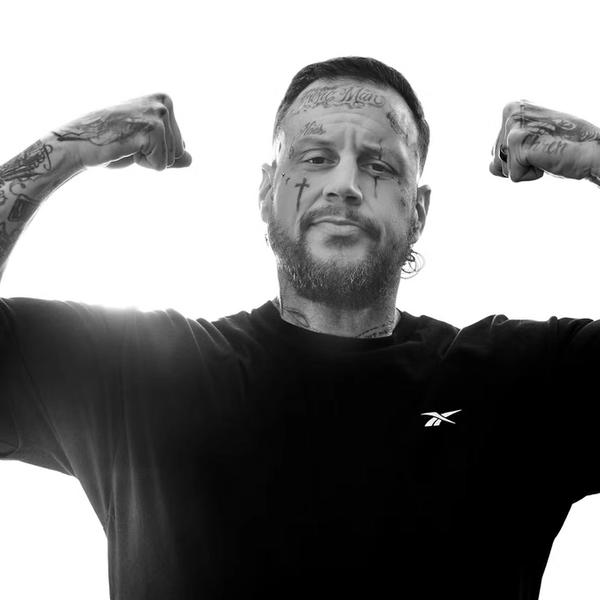
Jelly Roll is starting the year by completing a years-long dream — appearing on the cover of Men’s Health.
In a candid interview from the January issue, conducted over the course of a year with writer Ryan D’Agostino, the country superstar opens up about his ongoing weight loss journey, physical transformation and mental health struggles.
The feature finds Jelly Roll in the midst of major life changes as he reflects on the progress he’s made so far and the challenges he’s still facing.
Here, we break down the biggest revelations from the conversation:
His wellness clinic questioned how he was still alive
In the early stages of his challenge, Jelly set out to work with a medical team who could assist him from the off. That came in the form of Ways2Well, a wellness clinic based out of Texas.
The team set out to conduct a series of blood panels, where they found a range of initial issues that could both hamper Jelly's progress, and if not treated quickly, could have severe long-term impacts on his health.
Jelly's insulin levels were super high, his testosterone super low (more on that later) and his cholesterol and blood sugar both topped the higher tiers of what they should be.
“The first couple of blood panels were like, how are you alive?” Jelly told D'Agostino.
Jelly was determined to find the root causes of what was wrong, and that fit with how Ways2Well approach their work.
Brigham Buhler, the founder of the clinic, explained this to Men's Health: "If you have high blood pressure, you’re going to be given high blood pressure medication, right?" Buhler explained to D'Agostino.
“Why is your blood pressure high? That’s your body giving clues that something’s wrong. You have to peel back the layers and figure out what’s causing it."
He suffered from low testosterone and sex drive
In a very candid portion of the interview, Jelly describes how, through his ten year marriage to podcaster and personality Bunnie Xo, his ability to perform sexually caused him a great deal of struggle and distress. "You can't get it up without T" Jelly states. "I was married to a smoke show, and I was still struggling".
Following the blood work he had, he found the cause of his issues; "my testosterone level - and I'm cool to talk about this openly - was of a preteen boy". Jelly explains. "When I went in there for the test, it was bad. Bad. The world opened up when I seen it on paper."
As his group and people around him came together, Jelly began hormone therapy, something he believes he'll be on testerone replacements for for the rest of his life.
In November of 2025, when D'Agostino and Jelly met again, his situation had changed dramatically. "I’m chasing her around the house, you know what I’m saying?" he admits.
"I’m like a teenage kid again! I’m like the Pink Panther: I bust out of every corner. And she opens the cabinet and I go, ‘Hi!’ ” It’s got to be fun, this new life".
He tried GLP-1 for two weeks
As Jelly really started to shed the pounds, he came under intense scrutiny and scepticism as to how he was approaching the journey.
Some, particularly across social media, negatively accused the 'Son of A Sinner' singer of using Weight-Loss Drugs, specifically GLP-1 medication (ie: Ozempic / Mounjaro).
Within the initial print of the feature, Jelly told Men's Health that he wasn't against the use of weight-loss drugs, but he wasn't on them.
After the feature had been published, he stated that in the beginning of his weight-loss journey he had tried them, but that lasted for two weeks.
Jelly would go on to confirm that his routine and approach to food would be both the formative and most important step of his journey.
In an initial conversation with Buhler, the founder of the wellness clinic Ways2Well, Jelly had said that he didn't want to use any medications:
"'When I do this, I don’t want an asterisk next to my name, bubba,’ ” Buhler quoted Jelly to Men's Health. “'I want to show people that this is possible'.”
He had an addiction to money and importance
Through his young life, Jelly admits he was addicted to alcohol, cocaine and codeine. At even younger age, Jelly believes he found an even deeper vice.
"Around eighth grade, I discovered that there were was lots of ways to make money". Jelly explains to Men's Health. "It started with buying candy from the dollar store near my school. Then I'd go sell it at lunch. Then i end up getting a pager and getting some homies".
"The next thing you know, people see potential in you and they start feeding another direction". Observes the born-and-bred Antioch, Nashville resident. "Kids start smoking weed around the eighth grade. I happened to be able to find some of it."
As it has become the lore and history around the 'Somebody Save Me' singer, Jelly spent 10 years of his life from that point in and out of prison, within and amongst gangs and dealing drugs.
Jelly is the first to profess that it wasn't who he was or is: "Totally took a different path. Thought I was something I wasn't. And I was not that person, man. I am not that man. But if you'd asked me then, I'd have died proving it to you. I'd let you kill me to prove to you I was tough."
"It took, 12, 15 years of being in and out of the system and going through shit and dealing with drugs and drug addicts to realize, man, that was never actually who I was."
Every decision he made was based around his weight
In around 2021, before he'd cracked country music, Jelly weighed in at his heaviest of 540 pounds. This would affect his life and daily decisions.
"It was never-ending sadness" he admits. "and anger. I was a prisoner to my own body. Dude, wiping my ass was a problem. Washing myself properly was a problem. Getting in cars. Every decision I made in life had to be based on my weight".
"If it could hold me, facilitate me, or fit me - people don't think about every facet of 'I still want to be able to do that and I can't'. I was so inspired by that kind of stuff."
In reflection, Jelly explains he hated the person he had become in his twenties by this point. "I felt guilty about every decision I made in my teenage years, and that my default was to double down on them because I would have been embarrassed to back out of them".
For more on Jelly Roll, see below: