




Link copied

Before there was Emmylou Harris, there was Emmy Lou.
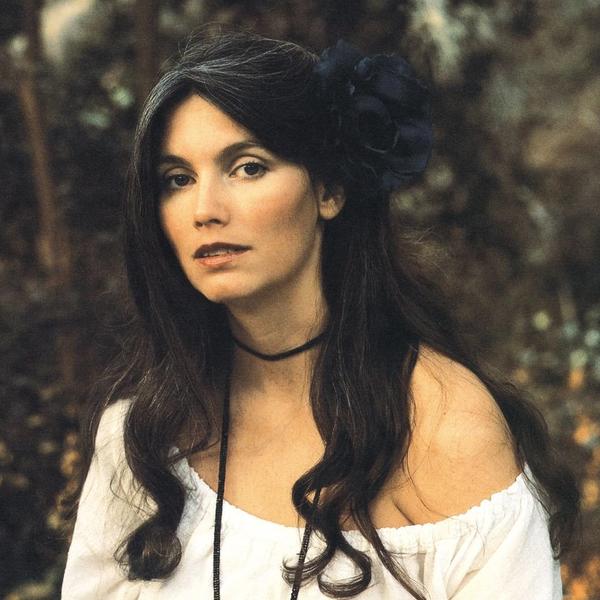
That was how her name appeared on the cover of Gliding Bird, the 1970 debut from a 23-year-old singer still several years away from finding the sound that would make her one of country music’s most consequential artists. There was no Gram Parsons yet. No Pieces of the Sky. No Hot Band. No decades-long reputation as an interpreter capable of taking someone else's song and somehow making its heartbreak feel entirely her own.
Instead, there was a young folk singer searching. And Gliding Bird sounds like it.
Released by Jubilee Records, the album has long occupied an unusual place in the Emmylou Harris story. Founded in New York in 1946, Jubilee had built its reputation largely through R&B and novelty records, scoring important crossover successes with acts like the Orioles before eventually releasing records by everyone from the Cadillacs to the Meters. It was hardly an obvious home for a young folk singer from the Washington, D.C. club circuit, but then very little about Gliding Bird fits neatly into the story that would eventually be written about Harris.
Timing did the record few favors either. By 1970, Jubilee was in financial trouble and was sold that same year; bankruptcy followed in 1971. Whatever chance Gliding Bird might have had to find an audience was tied to a label that was itself nearing the end of its story. Neither of the album's singles charted, and without the machinery to keep pushing the record, Gliding Bird quickly slipped from view.
Yet the circumstances surrounding the album also brought Harris into contact with musicians whose own careers stretched well beyond the confines of folk music. Among its producers was arranger and conductor Ray Ellis, himself a fascinating musical shapeshifter whose résumé stretched from orchestrating Billie Holiday's Lady in Satin to composing music for the 1967 Spider-Man animated series and, later, themes for NBC's Today. In some ways, Ellis was a fitting presence behind an album that seemed similarly uninterested in staying in one musical lane.
That eclecticism matters because Harris herself would later distance herself from the record, regarding 1975's Pieces of the Sky as her true beginning. History largely followed her lead, and Gliding Bird became less a first chapter than a prologue that could conveniently be skipped.
Yet there is something revealing in Harris's willingness to dismiss it. Artists are rarely afforded the luxury of erasing their earliest attempts, particularly once fame sends listeners searching backward through the catalogue. But Harris's rejection of Gliding Bird can also be understood as an indication of the discernment that would become central to her artistry. She knew the difference between possessing a remarkable voice and having found an artistic voice. Those are not necessarily the same thing.
On Gliding Bird, the former is already obvious. The latter is still taking shape. Harris could sing the material, often beautifully, but she had not yet discovered the musical language that allowed all of her instincts to work together. In recognizing that distinction, Harris demonstrated something that would serve her throughout the rest of her career: a remarkably clear understanding of what belonged to her and what did not.
That makes returning to the album more interesting, not less. More than half a century later, listening to Gliding Bird without immediately measuring it against everything that came afterward reveals something more compelling than an abandoned debut. It captures an artist before the pieces of her musical identity had fully settled into place.
Across its ten tracks, Harris is not yet trying to define herself as a country singer. She moves instead between folk, country, pop and the emerging country-rock sounds surrounding her generation. Hank Williams shares space with Bob Dylan, Fred Neil and even Bacharach and David. Five songs are Harris originals, an amount of self-written material she would not surpass on another album until The Ballad of Sally Rose fifteen years later. The choices can feel scattered, but taken together they reveal a young singer testing the boundaries of what might belong to her.
The title track, written by Harris's then-husband Tom Slocum, offers perhaps the clearest early evidence of what was already there. ‘Gliding Bird’ may not be material equal to the songs Harris would later make her own, but her vocal prowess is immediately apparent. Even before the repertoire caught up with the singer, the talent was unmistakable.
More revealing still is ‘I'll Never Fall in Love Again,’ the Bacharach and David standard made famous by Dionne Warwick. On paper, it shouldn't necessarily work here, sitting alongside folk originals, Dylan and Hank Williams. In Harris’ hands, it superbly does.
She seems to instinctively understand how to locate the ache underneath the song's pop sophistication, bringing a hard-felt longing to nearly every syllable. It is an early glimpse of the interpretive intuition that would eventually become one of her signatures: Harris does not simply sing a song beautifully. She finds the emotional truth inside it and pulls it forward.
The voice is younger. The artistic identity is unsettled. The pieces do not always fit. But the instinct does. And that may be Gliding Bird's most important connection to everything that followed.
Five years later, Pieces of the Sky would introduce the version of Emmylou Harris she was willing to claim as her true beginning. By then, her time singing alongside Gram Parsons had dramatically altered her musical trajectory, drawing her deeper into country music and helping her discover the possibilities that existed between its traditions and the music of her own generation. But Harris would never become an artist particularly interested in respecting genre borders. Instead, she built a career crossing them.
That same curiosity scattered somewhat awkwardly across Gliding Bird would eventually become one of her greatest strengths. Throughout her career, Harris would move between traditional country, bluegrass, folk, rock and pop, often less concerned with where a song belonged than with what she could uncover inside it. Her gift for interpretation would allow songs written by wildly different artists to coexist within the same musical world simply because Emmylou Harris was the one singing them.
There is another intriguing clue in those five Harris originals. Gliding Bird captures a young artist who might reasonably have imagined songwriting as central to her future. Instead, much of Harris's legacy would come from something harder to quantify: taste. She became an extraordinary curator, collaborator and interpreter, recognizing songs worth carrying forward and then reshaping them through the unmistakable character of her voice. The fact that her debut contains so much of her own writing only makes the direction her career eventually took more fascinating.
None of that makes Gliding Bird a lost masterpiece. Perhaps it is more valuable because it isn't one. It preserves the searching that usually disappears once an artist develops a recognizable identity and history begins working backward to make that evolution look inevitable.
And perhaps Harris was right to draw a line between Gliding Bird and everything that followed. Pieces of the Sky sounds like the work of an artist who knows considerably more about who she is, what songs belong to her and, just as importantly, what she can bring to them. That self-knowledge would become essential to Harris’ career.
Her greatness would depend not simply upon possessing one of popular music's most distinctive voices, but upon knowing where to place it. That may ultimately be the most revealing thing about the album Harris chose not to claim. Gliding Bird shows us the talent. Her decision to leave it behind shows us the artist.