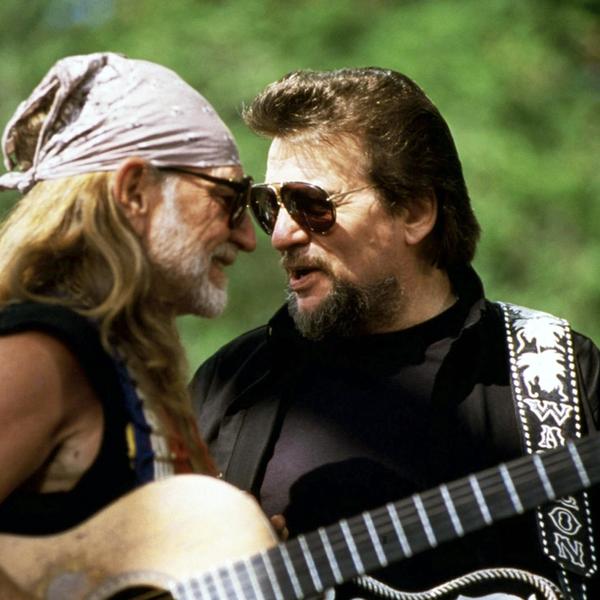
“His Eyes Were Filled With Tears”: Willie Nelson Recalls Waylon Jennings’ Emotional Reaction to Hearing ‘Stardust’ for the First Time
By Maxim Mower



Link copied

‘Stardust’ was initially met with skepticism from Willie Nelson's label at the time, but went on to be a huge commercial success.
Willie Nelson and Waylon Jennings have long cemented themselves as integral pillars of country music, with the outlaws completing redefining the genre's landscape in the 70's.
Aside from establishing an electric creative partnership that spawned seminal records, such as Willie & Waylon, Take It To The Limit and If I Can Find a Clean Shirt, the two artists were also tremendous pals, often seeking each other's advice on solo material.
This was epitomised in the lead-up to Willie's 1978 record, Stardust, recorded in just ten days and released a mere matter of months after the blockbuster Willie & Waylon.
Willie has always had a fraught relationship with the establishment, often getting into disputes and clashes in his pursuit of his own wonderfully idiosyncratic artistry.
But this came to a head on Stardust, with Columbia Records executives repeatedly expressing fears that recording an album of jazz-inspired and swing covers would damage the ‘Red Headed Stranger’ hitmaker's famous - and lucrative - “outlaw” image.
What's more, Nelson refused to put a picture of himself on the cover, which, at that time, was another major no-no for record labels, instead choosing a striking blue constellation.
In his insightful autobiography, It's A Long Story: My Life, co-written with David Ritz, Willie recalls one conversation with a Columbia executive, “They're songs from a forgotten era,” said the top man. “What's the point of digging up these old chesnuts?””
The executive goes on, “Listen to reason, Willie. These new generations you're talking about look at you like an outlaw guru. They want you to sing edgy cowboy songs. Or Grateful Dead or Bob Dylan songs. They relate to you becasue you're a nonconformist. Believe me, they don't want to hear you doing songs they associate with their fathers or grandfathers. Don't indulge yourself. Listen to reason”.
Willie then offers the perfect response, “I'm listening to my heat”, before explaining to the reader, “I didn't bother to say that I'd heard the same criticism about Red Headed Stranger. What was the point? Knowing that my contract guaranteed creative freedom, the executive realized his argument could go only so far. I didn't want to be disrespectful, but I also didn't want to hear any more bull”.
He reflects on how the only opinion he really cared about at that point was that of his good buddy, Waylon. Willie fondly remembers the moment he first played him Stardust in full.
The Texas troubadour movingly reflects, “Before the album was released, I played it for an audience of one: Waylon Jennings. He and I were in Austin, shooting the shit in the suite I kept as a hideaway at the old Hotel Gondolier on the banks of Town Lake. Waylon listened to the whole thing without saying a word. When the last song, ‘Someone to Watch Over Me’, was over, his eyes were filled with tears”.
Waylon gushed, “Goddamn, hoss...I never knew these tunes were so f***in’ beautiful. Where'd you find them?”, with Willie replying, “There's a big book full of them, Waylon”, before musing that he might have a future as a lounge singer, “If the album sells, I can make my living singing in cocktail lounges for the rest of my natural life”.
Stardust, of course, went on to become one of Willie's most commercially successful albums, with the retro-leaning project spending over two years on the Billboard 200, going five-times Platinum and staying on the Billboard Top Country Albums Chart for more than a decade. It produced now-iconic hits such as ‘Georgia on My Mind’ and ‘Blue Skies’, and remains a touchstone for artistic freedom.
In the book, Willie considers its ongoing impact, and highlights how it showed that country listeners were also interested in other genres, “Stardust broke down barriers and busted up categories. Its blockbuster sales success put me in a position where I never had to argue with record execs again. From then on, without discussion, I just kept recording what came to me naturally, without forethought or analysis”.
When we think of country music's “outlaw” movement, we inevitably conjure up the weather-worn yet charismatic cowboys, the rip-roaring adventures and the vibrant Western scenery. But really, despite what the Columbia executive advised, Willie's forward-thinking album, Stardust, is the true encapsulation of what it means to be an outlaw - someone untethered by others’ expectations and criticism.
For more on Willie Nelson, see below: